
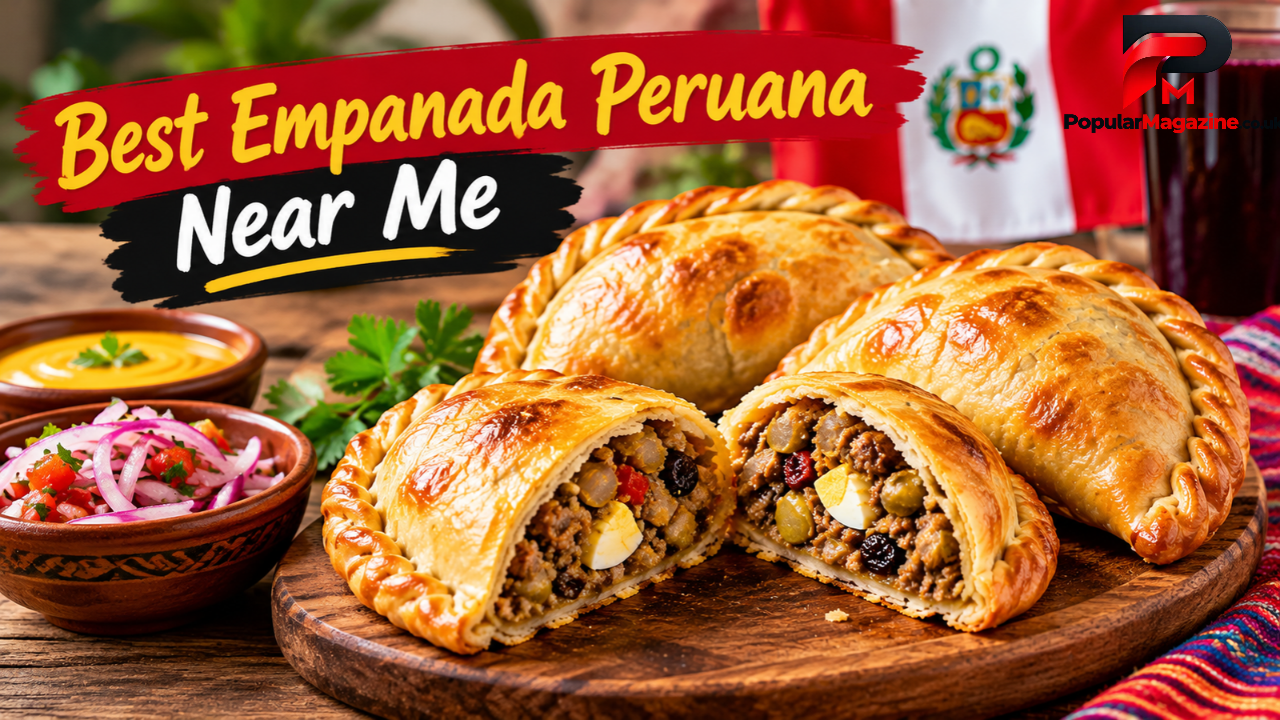
Say you search “best empanada peruana near me” and your screen fills with a dozen pins. Some look promising. Others might be serving generic pastries with a Peruvian label slapped on. So how do you tell which is which?
Below, you’ll find simple ways to spot the bakeries that truly care about their pastry. You’ll learn what a proper Peruvian empanada tastes like, which flavors to try first, and how to judge a bakery or restaurant before you order.
Table of Contents
ToggleWhat Makes an Empanada Peruana Different?
Empanadas exist across Latin America, Spain, and the Philippines, but the Peruvian version has its own personality.
The biggest difference is the cooking method. Most Peruvian empanadas are baked, not fried. That gives you a golden, slightly flaky shell instead of a bubbly, greasy one.
The dough is usually made with wheat flour and butter or lard. Many bakers brush the top with egg wash, and some finish it with a light dusting of sugar. That sweet-and-salty contrast surprises first-timers, but it’s a classic touch.
The filling is where things get interesting. A traditional beef empanada often combines seasoned meat, onion, hard-boiled egg, olives, and raisins. It sounds like a lot, but together it works.
The Flavors Behind the Filling
Peruvian cooking leans on a handful of signature ingredients:
- Ají amarillo: a fruity yellow chili with gentle heat
- Ají panca: a smoky, mild red pepper
- Cumin: gives meat fillings a warm, slightly nutty depth
- Onion and garlic: the base of almost every savory recipe
If an empanada tastes bland or one-note, these flavors are probably missing.
Popular Types of Peruvian Empanadas to Try
Menus differ from shop to shop, so you may not see all of these, but this is what to keep an eye out for.
| Type | Main Filling | Flavor Profile | Best For |
|---|---|---|---|
| Empanada de carne | Seasoned beef, onion, egg, olive, raisin | Savory, slightly sweet | First-timers who want the classic |
| Empanada de pollo | Shredded chicken, often with ají amarillo | Mild, creamy, gently spicy | Anyone who prefers lighter flavors |
| Empanada de queso | Melted cheese | Rich, salty, simple | Kids and vegetarians |
| Empanada de ají de gallina | Creamy chicken in yellow chili sauce | Bold, comforting | Fans of Peruvian home cooking |
| Empanada de lomo saltado | Stir-fried beef, onion, tomato | Smoky, savory | Adventurous eaters |
| Empanada dulce | Manjar blanco (milk caramel) | Sweet, soft | Dessert lovers |
If you’re unsure, start with carne. It’s the benchmark. A place that nails the beef empanada usually takes the rest of the menu seriously too.
How to Spot a Great Empanada Spot Before You Order
A search page and a star average can only take you so far. Here’s what to check.
Read the Reviews Carefully
Don’t just look at the overall score. Search the reviews for words like “authentic,” “flaky,” “fresh,” and “homemade.” Pay attention to comments from people who mention growing up in Peru or visiting often. Those reviewers usually know exactly how it should taste.
Also look at recent reviews. Quality can change when ownership or recipes do.
Check the Photos
Good empanadas have a few visible clues:
- An even golden color, not pale or burnt
- A neat, crimped edge that looks hand-sealed
- A shiny egg-wash finish
- Visible filling when cut open, not just a pocket of air
Customer photos are more honest than professional ones.
Look at the Menu
A strong sign is a menu that offers more than one filling and uses specific terms like ají amarillo or lomo saltado. It suggests the kitchen knows Peruvian cuisine rather than just following a trend.
A short menu isn’t a bad thing, either. Some of the best spots make only a few varieties and do them well.
Ask Simple Questions
Whether you phone ahead or stop by, a few questions help:
- Are the empanadas baked fresh today?
- Is the dough made in-house?
- What’s the most popular filling?
- Is there a dipping sauce available?
A warm, assured reply is usually a sign that someone in the kitchen cares about the product.
Where to Find the Best Empanada Peruana Near Me
The best empanada peruana isn’t always at the place with the biggest sign. Here are the types of spots worth searching.
- Peruvian restaurants: Appetizer menus often include a house-baked empanada, and because the kitchen cooks full Peruvian meals, the care usually shows.
- Latin American bakeries: Many bake small batches early in the day, so the morning is the best time to visit, when trays come out warm.
- Food trucks and market stalls: Family-run stands often cook from recipes passed down at home, which can make them a hidden favorite.
- Farmers’ markets and cultural festivals: Here you can meet home bakers who sell in person and may not be listed on any map.
- Local Facebook and Instagram groups: Search for Peruvian community pages in your city. Members share tips quickly.
When searching online, try variations like “Peruvian bakery,” “Peruvian restaurant,” or “empanadas peruanas” along with your city or neighborhood. Google Maps filters help, too. Sort by rating, then check the newest reviews.
What to Serve With Peruvian Empanadas
Empanadas are filling on their own, but a few pairings make the meal better.
- Salsa criolla: a bright onion and lime relish that cuts through rich fillings
- Huancaína or ají sauce: creamy and mildly spicy, great for dipping
- Lemon wedge: some people squeeze it over beef empanadas
- Inca Kola or chicha morada: classic Peruvian drinks
- Café con leche: a good match for sweet empanadas
A couple of empanadas and a simple salad can easily become lunch.
Tips for Ordering and Enjoying Them
- Go early. Fresh batches often sell out by afternoon.
- Order a variety. Try one meat, one cheese, and one chicken to compare.
- Eat them warm. Reheating works, but fresh from the oven is hard to beat.
- Reheat in an oven or air fryer. Microwaving softens the crust.
- Ask about bulk orders. Many places offer deals for parties and events.
Frequently Asked Questions
What is the most popular empanada peruana?
The beef empanada, known as empanada de carne, is the most traditional and widely sold. It usually includes seasoned meat, onion, olive, egg, and sometimes raisins.
Are Peruvian empanadas baked or fried?
Most are baked, which gives them a lighter, flakier crust. Some shops do fry certain versions, so it’s worth asking if you have a preference.
Are Peruvian empanadas spicy?
Usually not very. Peruvian cooking uses chili for flavor more than heat, so most empanadas are mild. Spicy sauces are normally served on the side.
Can I find vegetarian empanadas peruanas?
Yes. Cheese is the most common vegetarian option, and some bakeries also offer spinach, corn, or mushroom fillings. Check the ingredients, since some doughs contain lard.
How should I store and reheat leftover empanadas?
Keep them in an airtight container in the fridge for up to three days. Reheat at about 180°C (350°F) for 8 to 10 minutes. This restores the crispness better than a microwave.
How much do Peruvian empanadas usually cost?
Prices vary by location and size. Generally, expect to pay a bit more for specialty fillings like ají de gallina or lomo saltado than for cheese or plain beef.
Final Thoughts
Finding the best empanada peruana near you comes down to a few smart habits. Read recent reviews, study the photos, and look for menus that reflect real Peruvian flavors. Start with the classic beef empanada, then branch out.
Once you find a spot that bakes them fresh with a flaky crust and well-seasoned filling, you’ll know. Keep it bookmarked, bring a friend, and order one more than you think you need.
Also Read: Michelle Obama and Ginni Rometty: What Two Chicago Women Can Teach Us About Leadership
Tagged: Best Empanada Peruana Near Me empanada de carne empanada peruana peruvian bakery near me
One thought on “Best Empanada Peruana Near Me: How to Find the Real Thing”