
A mate of yours leans back, completely serious, and announces that he’s never heard of Oasis.
The room goes quiet. Nobody shouts. Nobody argues. Someone just exhales and says it, flat as a pancake:
“Don’t even joke, lad.”
And somehow that settles the whole thing. No debate needed, no follow-up questions. The sentence did its job in three words.
That’s the strange power of this little phrase. It’s everywhere online, it’s almost always used as a joke, and yet most people who type it couldn’t explain what it means if you asked them directly.
So let’s fix that.
Table of Contents
ToggleWhat “Don’t Even Joke Lad” Actually Means
Strip away the meme context and it’s a reaction to disbelief. You say it when someone tells you something so absurd, so unexpected, or so personally offensive that you refuse to accept it as reality.
It’s not a request. Nobody honestly thinks the other person will stop joking. It’s more like a dramatic flinch, a verbal double-take. The closest American equivalents are “you’re lying” or “say sike right now,” though neither carries quite the same dry, deadpan weight.
Here’s the part people miss: the phrase is almost never used about anything that matters. It’s reserved for small stuff. Bad opinions, shocking gaps in someone’s cultural knowledge, questionable food takes. The humour comes entirely from bringing heavyweight drama to a lightweight situation.
Say it about an actual tragedy and you sound like a terrible person. Say it because someone put milk in before the water when making tea, and you’ll get a laugh.
Why It Sounds Like a Warning (But Really Isn’t)
Read the words on paper and it looks aggressive. “Don’t even joke” is a command. Adding “lad” makes it sound like a bloke in a flat cap is about to start something.
In practice, the tone does the opposite.
Think about how mates actually talk. Real hostility is quiet and specific. Banter is loud, exaggerated and deliberately over the top. This phrase sits firmly in the second camp. The mock outrage is the whole point, a small performance that says “I care about this more than a sane person should.”
There’s also a subtle social signal buried in it. You don’t say it to strangers. You say it to someone you’re comfortable enough to be fake-angry at. So using it is quietly saying, “we’re close.”
That’s why it works so well in group chats. It hits the sweet spot between affectionate and ridiculous.
The Word “Lad” Is Doing Most of the Work
Take “lad” out and the sentence collapses.
“Don’t even joke” is what a manager says to an employee who’s pushing it. It’s cold, formal, faintly threatening. Add “lad” and it softens instantly, because “lad” is how people in the north of England, Scotland and Ireland address their mates.
Worth knowing that “lad” carries some baggage. It’s tied to a whole British subculture, the 1990s “lad” era of Britpop, football terraces and men who made a personality out of not taking anything seriously. Nobody using the meme is signing up to that. They’re just borrowing the word because it sounds friendly and slightly daft at the same time.
Same reason “mate” works in Britain, “bro” works in the States, and “bruh” works everywhere with a phone in hand. It’s a handshake disguised as an insult.
How Don’t Even Joke Lad Went From Caption to Catchphrase
The phrase isn’t new, which is the bit that surprises people. “Don’t even joke” was already ordinary speech across the UK and Ireland long before anyone put it on a picture.
What changed was packaging.
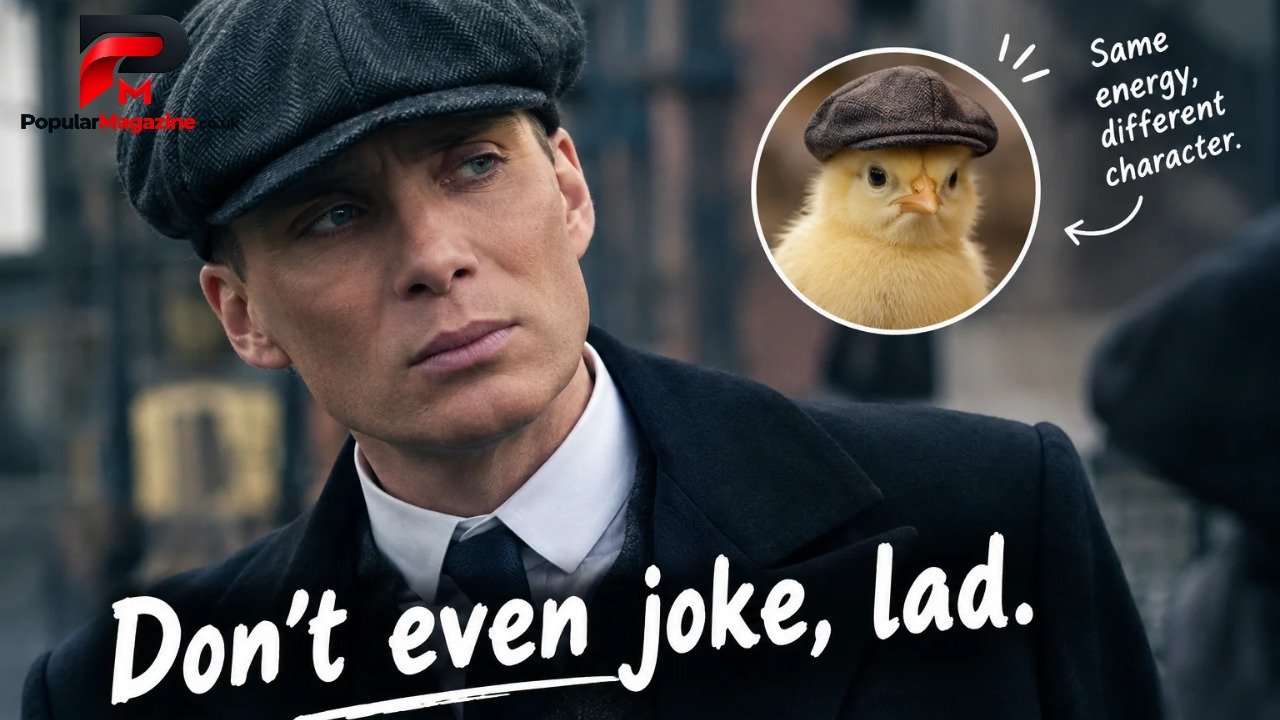
Back in September 2022, an iFunny user posted a still of Thomas Shelby from Peaky Blinders with the line written underneath. That post is where the meme really begins. Notice what it does: it takes a character famous for cold, terrifying calm and makes him react like a wounded teenager. The gap between the image and the caption is the joke.
Then came the format that made it reusable. In 2023, people started sharing screenshots of Instagram Story questions, where a follower asks “You big into Peaky Blinders?” and the reply is just that image. Swap the topic, keep the intensity, and you’ve got a template that works for any fandom.
The third wave arrived at the end of 2024, and it had nothing to do with gangsters. Someone paired the caption with a photo of a baby chick in a little newsboy cap, and it took off again across Instagram, X and TikTok.
A fluffy bird saying something with the energy of a 1920s crime boss is genuinely funny. More importantly, it pulled in an audience who’d never watched a single episode of the show.
One correction about the “don’t even joke lad” meme worth making, because it gets repeated constantly: no character in Peaky Blinders ever says this line. It’s fan-made text pasted onto a still. The show’s grim Birmingham atmosphere inspired it, but that’s as far as the connection goes.
How People Actually Use It
Watch how it moves through a normal conversation. Someone says something daft, and the reply comes back on reflex, almost before they’ve finished the sentence.
- A friend admits he’s never sat through a full episode of anything. You don’t argue. You just look at him and go, “don’t even joke, lad.”
- Someone claims Yorkshire puddings are overrated. That one gets a flat “don’t even joke” and a slow shake of the head before anyone changes the subject.
- A lad swears he’s never lost a game of pool. This earns the full version, with evidence attached: “I was there on Tuesday, so don’t even joke.”
- Your cousin says he prefers the remake. Honestly, “don’t even joke, lad” is the kindest response available to you.
- A mate starts bragging about his fantasy football team again. “Don’t even joke, lad, we both know how this season ends.”
- A stranger asks whether you’re “big into that band.” Here the phrase becomes the entire answer. Nothing else needs saying.
Notice what all six have in common. It’s a reply, never an opening line. It lands after something has been said, never before. Drop it cold into a conversation and people will just stare at you.
How It Compares to Other British Reactions
English has no shortage of ways to tell someone they’re talking rubbish. This one has a very specific temperature, and it helps to see it next to its neighbours.
| What you hear | Where it comes from | What it really means |
|---|---|---|
| “Don’t even joke, lad” | Northern England, Scotland, Ireland | Mock outrage with affection attached |
| “You’re having a laugh” | All over the UK | Not a chance, and you know it |
| “Are you mad?” | British and Irish | That’s a terrible idea |
| “Stop chatting breeze” | London and MLE slang | You’re talking nonsense |
| “Wind your neck in” | Blunt British | Calm down, you’re doing too much |
| “Bro, what?” | US internet | Pure confusion, no charm |
The difference sits in the warmth. “You’re having a laugh” is sceptical. “Are you mad?” is dismissive. “Don’t even joke, lad” is the only one that feels like it’s coming from someone who actually likes you.
6 Simple Rules for Getting It Right
Slang travels badly when it’s forced into the wrong room. Follow these six and you’ll never get it wrong.
- Reply, don’t open. It needs something to react to. Dropping it cold into a conversation gets you a blank look.
- Keep the stakes tiny. It’s funny about football, tea and terrible opinions. Use it about real bad news and you sound heartless.
- Deliver it flat. No exclamation marks, no shouting. The deadpan is the joke.
- Keep it out of work. Emails, product pages, reports: leave it. It reads as messing about, because it is.
- Don’t force the accent. A fake Tommy Shelby voice tips from playful into mocking in half a second. Plain is safer and funnier.
- Let it rest. One good hit is plenty. Say it three times in a day and watch it stop being funny.
Used well, the phrase does something English struggles with: rejecting an idea dramatically without actually being rude.
Frequently Asked Questions
What does “don’t even joke lad” mean in simple terms?
It’s a British slang phrase meaning “I refuse to believe you just said that.” It’s a playful expression of disbelief, used when something is too surprising, too silly, or too offensive to accept as real.
Do British people actually say this out loud?
Yes, the base phrase is real everyday speech, though usually a bit differently. “Don’t even joke” gets used genuinely, while the full meme version is mostly a written or typed reaction. Say it out loud and you’ll likely be performing the meme on purpose.
Did Peaky Blinders ever say “don’t even joke lad”?
No. The line doesn’t appear in the show. It was invented by a fan who put the words over a photo of Thomas Shelby in 2022, and the association stuck because the tone matched the character so well.
Is it rude?
Almost never. It’s mock anger, not real anger. The word “lad” keeps it friendly, and it’s normally used between people who already know each other well.
Why do people write it without an apostrophe?
Because it’s typed in a hurry on a phone. You’ll see “dont even joke lad” in captions and comments far more often than the punctuated version, and nobody’s correcting the grammar of a meme. Type “dont even joke lad” into Google and you’ll get the same results either way.
Final Thoughts
“Don’t even joke lad” works because it solves a very small problem very well. Sometimes someone says something so daft that a normal reply won’t cover it, and you need a phrase that sounds dramatic without actually starting an argument.
It’s not really about jokes. It’s about care. You only bother pretending to be outraged if you’re invested enough in the conversation to play along.
So the next time a friend claims they’ve never heard of Oasis, you’ll know exactly what to say. Flat voice, no exclamation mark, quick look away.
Don’t even joke, lad.
Also Read: Audiodisplayed Meaning: What It Means and Why You See It
Tagged: don't even joke lad don't even joke lad meaning don't even joke lad meme
One thought on “Don’t Even Joke Lad: What the British Slang Phrase Really Means”